


Electrician School in Ohio: What Students Wish They Knew Before Enrolling
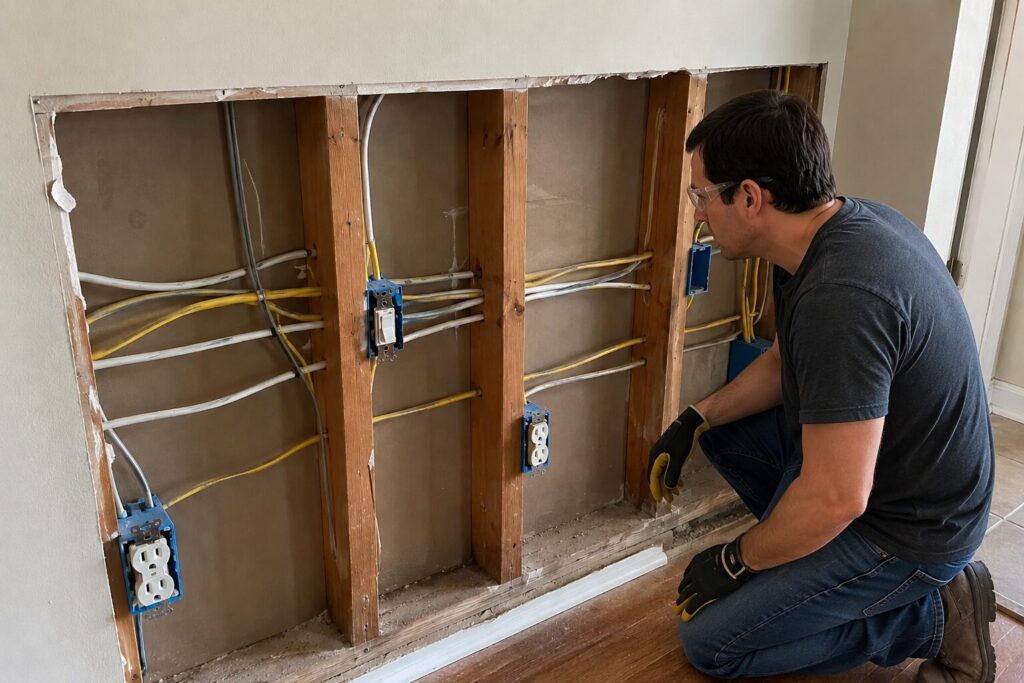
Every building has electricity hidden behind the walls. Flip a light switch and the room brightens. Plug in your phone and it starts charging. Most people never think about what makes those simple moments happen. Until one day, you do.
Electrician school in Ohio is where many students begin learning what is happening behind those walls. At electrician school, you quickly discover that electrical work is more than pulling wires or replacing outlets. During electrician training, you learn how electrical systems work, why they work that way, and how to solve problems safely before you ever touch live equipment. From there, your first weeks are spent building the habits every electrician depends on.
Why Electrician School in Ohio?
Many students do not wake up one morning and decide they want to become an electrician. The interest usually starts much earlier. Maybe you are the person friends ask to help hang a ceiling fan. Maybe you enjoy figuring out why something stopped working instead of replacing it. Or you simply like building things and seeing the results when the job is finished.
That curiosity matters because electrical work is built around solving problems. Every project has a starting point, but it rarely comes with all the answers. Electricians spend their days reading plans, making careful measurements, testing circuits, and deciding what needs to happen next. The tools are important, but so is the ability to think through each step before making a connection.
The project may seem simple, but it raises bigger questions. How do you know which wire goes where? Why are there different breakers? What keeps someone safe while working around electricity? That is where training begins to connect the dots.
An electrician school takes those small experiences and builds on them. You learn the reasons behind what you are doing instead of following directions by trial and error. Over time, the things that once felt confusing start to make sense. You stop guessing and start understanding how electrical systems work together.
What Your First Weeks of Electrician School Are Really Like
The first day usually feels a little different than students expect. You may walk into the lab thinking you will start wiring circuits right away. Instead, you quickly learn that every project begins with safety. That foundation stays with you throughout your training and later on the job.
Learning Safety Before Anything Else
Before you strip your first wire or connect your first outlet, you learn why electricians never take shortcuts. Instructors introduce personal protective equipment (PPE), electrical hazards, lockout/tagout procedures, and the safe way to handle tools and equipment. At first, it can seem like there are a lot of rules. Then you realize every one of those rules exists because someone learned a hard lesson somewhere along the way.
As you move through the program, those habits become automatic. You start checking your work before someone reminds you. You think about safety before picking up a tool. Students often say this is one of the biggest changes they notice during their first few weeks.
Getting Comfortable with Electrical Tools
Every trade has its own set of tools, and electrical work is no different. During your first labs, you begin using wire strippers, multimeters, conduit benders, measuring tools, screwdrivers, and other hand tools that electricians rely on every day.
At first, even simple tasks can feel awkward. You might spend extra time making a clean wire strip or measuring conduit twice before making a bend. That is normal. After a few weeks of practice, your hands begin to remember the process. You stop thinking about how to hold the tool and start focusing on the quality of your work instead.
Reading Electrical Diagrams
One of the biggest adjustments for many students has nothing to do with tools. It is learning to read electrical diagrams. The symbols and lines on a blueprint may look confusing at first. You might stare at a wiring diagram and wonder how experienced electricians can understand it so quickly. Then your instructor walks through it one symbol at a time. Soon you begin recognizing switches, receptacles, circuits, and connections without stopping every few seconds.
It does not happen overnight. It happens through repetition. By the end of your first few weeks, you are no longer looking at random lines on a page. You are beginning to see how an electrical system fits together before a single wire is installed.
Things You Probably Do Not Expect Until You Start
Some lessons come from the instructor. Others come from spending time in the lab, watching your classmates, and realizing everyone is learning together. Many students begin electrician school expecting to learn how to install wiring. They leave the first few weeks with a completely different view of what the job actually involves.
Electrical Work Involves More Thinking Than Most People Realize
Before starting school, it is easy to picture electricians using ladders, drills, and hand tools all day. Those things are certainly part of the job, but they are only part of it. Much of the work happens before a single wire is installed.
You learn to study blueprints, plan the order of a project, measure carefully, and think through each connection before making it. One small mistake early in the process can create bigger problems later, so planning becomes just as important as working with your hands. Many students discover they enjoy this side of the trade as much as the physical work. Every project feels like a puzzle waiting to be solved.
Making Mistakes Is Part of Learning the Trade
Nobody wires every project perfectly the first time. A connection gets mixed up. A measurement is slightly off. A conduit bend is not quite right. Almost every student has one of those moments where something does not work and they have to figure out why. That is exactly why you practice in the lab.
Instead of simply pointing out mistakes, instructors often ask questions that help you find the problem yourself. You retrace your steps, test the circuit, and slowly work toward the answer. The lesson sticks because you solved it instead of watching someone else do it. Many students realize that mistakes are not setbacks. They are part of the learning process.
You Start Looking at Buildings Differently
After a few weeks of training, you begin noticing electrical work everywhere. You walk into a grocery store and look up at the lighting instead of the shelves. You notice conduit running along the ceiling of a warehouse. You start paying attention to electrical panels in office buildings or wondering how power reaches different parts of a home. The things that used to blend into the background suddenly catch your attention.
It is a small shift, but it is also a sign that you are beginning to think like someone in the trade. You are no longer just seeing the finished building. You are starting to understand what is happening behind the walls.
Is Electrician School Right for You?
By this point, you have probably realized electrician school is about more than learning to run wire or use tools. It is about developing a different way of thinking. You learn to slow down, pay attention to details, solve problems methodically, and build confidence through practice. Every lab gives you another chance to improve. Every project teaches something new, even when it does not go exactly as planned.
If you enjoy working with your hands but also like figuring out how things work, electrician training may be a good fit. Students who ask questions, stay curious, and are willing to learn from mistakes often find themselves becoming more confident with each project they complete.
At OBC, the Electrical Applications program gives you opportunities to build those skills during hands-on lab experience while learning from instructors who have worked in the electrical industry. With campuses in Columbus, and Elyria, students can train close to home while preparing for entry-level opportunities in the electrical field.
The hardest part for many students is not learning how to bend conduit or read a wiring diagram.
It is deciding to get started. If you would like to learn more about the Electrical Applications program, explore campus locations, or speak with an Admissions Representative, we can help you take the next step.
Frequently Asked Questions (FAQs) About Electrician School in Ohio
How long is electrician school in Ohio?
The length of electrician school depends on the program you choose and iBefore you enroll, it helps to understand the program schedule, the courses you will complete, and how much time you can expect to spend in class and the lab. At OBC, you can complete your electrician training in as little as 9 months, attending full-time.
What do you learn in electrician school?
Students learn much more than how to install wiring. Training includes electrical safety, blueprint reading, wiring methods, electrical theory, tool usage, residential and commercial electrical systems, and troubleshooting techniques. Classroom instruction is combined with lab projects so you can apply what you are learning while building practical skills.
Do I need experience before enrolling?
No. Many students begin electrician training with little or no previous experience. The program starts with the fundamentals and builds your knowledge step by step. As you gain experience in the lab, the skills and techniques become more familiar, and your confidence continues to grow.
Is electrician training mostly hands-on?
Hands-on learning is an important part of electrician training because many skills are developed through practice. Students spend time working with electrical tools, wiring projects, measuring equipment, and troubleshooting exercises while classroom instruction explains the concepts behind the work. Learning both the “how” and the “why” helps prepare students for real-world situations.
What can I do after completing electrician training?
Completing an electrician training program can prepare you for entry-level opportunities in the electrical field, depending on employer requirements and your career goals. Many graduates continue developing their skills through on-the-job experience while working toward additional responsibilities and long-term career growth.
Want to Learn More?
The Electrical Applications Diploma program at OBC is geared toward the hands-on training that you need to step right into the workforce as a junior electrician. Students learn theory in the classroom and then apply those skills in a lab setting, including the installation and maintenance of electrical wiring, transformers, A/C and D/C motor control circuits, instrumentation, programmable logic controllers, and more.
Contact us to learn more about our Electrical Applications program today.