
How to Start a Career in the Trades or Healthcare in 2026: Training Paths and Program Options
Are you ready to start a new career? Starting a new career in 2026 is about practical skills. Many adults want work that leads to real job openings. That is why trade careers continue to stand out. Healthcare fields focus on training that connects directly to employment, not extra coursework that delays the job search.
Are you changing direction, returning to school, or looking for something more reliable? The good news is that healthcare offers a clear path that does not require four years of college.
Why Trades and Healthcare Are Strong Career Choices in 2026
The demand for skilled workers keeps growing. Construction, maintenance, transportation, and healthcare all have employee demand. Retirements and population growth increase that demand every year. Employers are looking for people who can start working in these roles with practical training and basic experience.
Healthcare shares a focus on skill-based learning. Students spend time practicing tasks they will perform on the job. This helps shorten the gap between training and employment. For many people, that makes these careers feel like a better path.
What Training Looks Like in Real Life
Trade programs focus on hands-on training, not classroom theory. Students use industry-standard tools, equipment, and systems they will also use on the job. Classes begin with safety and fundamentals, then moves into hands-on practice that builds confidence.
Programs that OBC offers, like HVAC, electrical work, and truck driving take less than a year to complete. This shorter timeline helps students enter the workforce faster.
Trade careers appeal to people who prefer variety. Workdays may involve different locations, new challenges, and physical activity. For some, that makes the work more rewarding.
How Healthcare Training Is Different
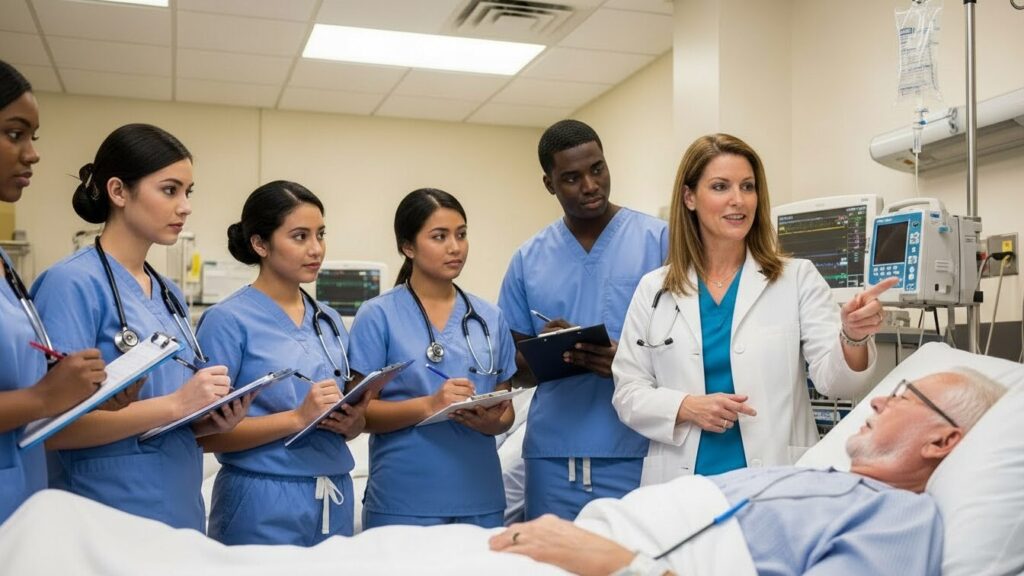
Healthcare training focuses on people, structure, and teamwork. Students learn how to take care of patients, follow medical procedures, and work on care teams. These programs combine classroom instruction with lab work and supervised clinical rotations.
This hands-on approach helps students build confidence before working directly with patients. The work can be demanding, but many find it fulfilling because it directly impacts patients’ lives.
Starting in Nursing with a Practical Nursing (LPN) Program
Practical Nursing is a great way to start a healthcare career. LPN programs prepare students for entry-level nursing roles in hospitals, clinics, and long-term care facilities. Training focuses on daily patient care that includes vital signs, basic procedures, medication support, and documentation.
Most LPN diploma programs can be completed in one year. Adults who want to change careers without long delays find this path compelling. After completing the program and passing the NCLEX-PN licensing exam, graduates can begin working in healthcare.
At OBC, the Practical Nursing program emphasizes hands-on training and real clinical experience. Students learn skills that match what employers expect.
Moving Forward with an LPN to RN Path
Some nurses begin as LPNs and later decide they want expanded responsibilities. An LPN to RN program allows students to become RNs without starting from scratch. The LPN to RN program builds on the students existing nursing education and experience.
Training focuses on advanced patient care, decision-making, and leadership skills. Students prepare for registered nurse roles that offer broader job options and increased responsibility. Because prior coursework counts toward the program, coursework is often shorter than a traditional RN path.
Choosing Between Trades and Healthcare
Deciding between these fields often comes down to how you want your days to look. Trade work usually involves physical tasks, tools, and changing environments. Healthcare involves patient care, schedules based on shifts, and teamwork within structured settings.
How to Pick the Right Program in 2026
When choosing a program, it helps to focus on outcomes. Program length, hands-on training time, and licensing preparation matter most. Schools like OBC that connect training directly to job skills are a better choice. OBC also helps with job placement, resumes, and interview preparation to make the transition into a new career.
Final Thoughts
Healthcare and trades careers are practical options in 2026. They offer focused training and opportunities for growth. For many people, the hardest part is starting. Once training begins, the path forward becomes clearer. And OBC will be with you every step of the way.
Want to Learn More?
Want to make an impact on your local community? OBC offers a Practical Nursing program that will train you for entry-level positions while integrating the future of healthcare for improved patient outcomes.
Practical Nursing Program
The Practical Nursing (PN) Program provided by OBC is 44 weeks or four quarters long. The program covers theory, nursing skills lab, simulation lab, and clinical experiences. Once you graduate from the PN program, you will be fully qualified to write to the NCLEX-PN® to become licensed as an LPN in Ohio.
LPN to RN Program
The LPN to RN program provided by OBC is 44 weeks or 4 quarters long. This program covers patient care skills, medical knowledge and critical thinking and decision-making skills. Once you graduate from the LPN to RN program, you will be fully qualified to take the NCLEX-RN Exam to become licensed as an RN in Ohio and 38 additional states as part of the Multi-State Compact License.
Contact us today to learn more about our LPN or LPN to RN programs.