

 About the Electrical Applications Program
 About the Electrical Applications Program
Take the first steps toward an in-demand career by completing the Electrical Applications diploma program at OBC
Electricity powers so much of our daily lives — from our lights to our laptops, our cell phones to our appliances. We depend on electricity everywhere we go, whether it’s at home, at the office, in schools, at the grocery store or the hospital, or even when we’re waiting at a stoplight. And when the lines go dark, whether from bad weather or bad timing or just everyday malfunctions, everyone calls one person to get things back online: an electrician.
Student Testimonial
“Something about this place that most people don’t know is that everybody here bends over backwards for you … as far as helping you get through your courses, financial aid, job search …”
At OBC, you can enroll in an electrician training program that can prepare you for an entry-level position as an electrician, providing skills and services needed in various settings, including residential, commercial and industrial. Whether it’s wiring a new building, fixing an electrical problem, or getting old wiring up to code, OBC can get you the training you need to become an electrical technician.
Skills and Essential Abilities Required in Electrician Training
Training to become an electrician takes focus, hands-on work, and attention to safety. These abilities can help you succeed in the program and on the job. A few key abilities include:
- Understanding basic math and electrical concepts
- Working safely with wiring, tools, and live systems
- Paying close attention to detail to avoid mistakes
- Staying physically active and working in different environments
- Following instructions and reading diagrams or plans
- Communicating clearly with team members and supervisors
Pay Expectations for Electrician Jobs
The U.S. Bureau of Labor Statistics reports that the median pay for electricians is $60,240 per year. When you’re just starting out, you can expect to earn less as you gain experience. Electricians at the lowest 10 percent earn about $37,440, while those at the top 10 percent can earn more than $102,300. As you build skills and take on more complex work, your pay can increase over time.
Our School's Curriculum
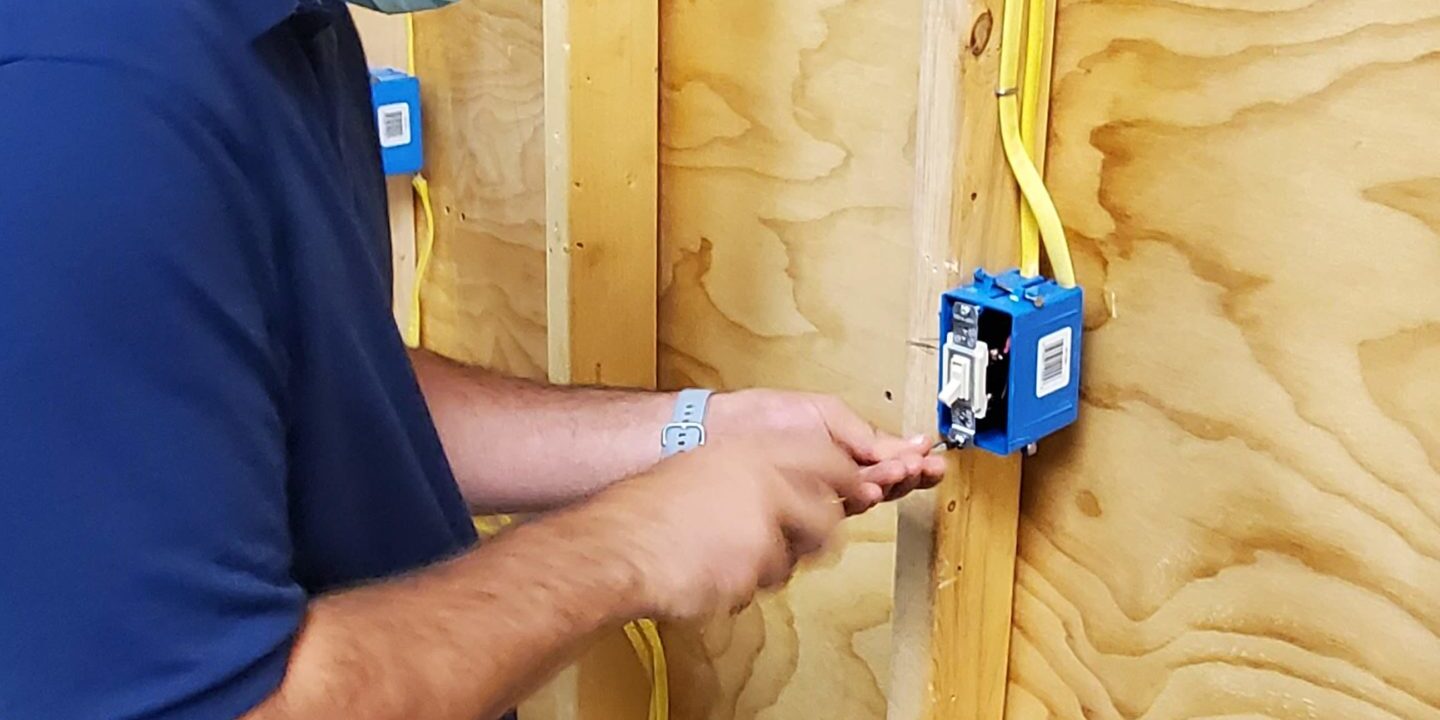
The Electrical Applications diploma program at OBC offers hands-on training that you need to start working as a junior electrician. You will learn theory in the classroom and apply those skills in a lab setting, to work on installing and maintaining electrical wiring, transformers, a/c and d/c motor control circuits, instrumentation and programmable logic controller, and more. The 55-credit hour electrician training program includes courses like:
- Wiring, Cabling, & Connections
- Motors & Controls
- Low Voltage
- Residential Installation
- Commercial Installation
Getting trained in a vital trade shouldn’t require putting everything on hold, which is why our OBC Trades Academy Extension location located in Elyria campus offers the Electrical Applications program full-time, day or evening, to accommodate your busy schedules. We think each of our OBC students deserves personalized attention from instructors, so we keep our class sizes small and focused, providing the kind of professional learning environment best suited for adults who are already juggling jobs, families and other commitments.
What Does an Electrician Do?
Electricians install, fix, and maintain electrical systems that power homes and buildings. They work with wiring, outlets, breaker panels, and lighting. One day might be running new wire in a house. Another day might be fixing a power issue.
They also test systems to make sure everything is safe and working right. Some electricians focus on homes, while others work on large buildings or job sites. It’s hands-on work, and every job can be a little different.
Career Opportunities with Electrician Training
After completing the Electrician program, you can work in different environments where electrical systems are needed, including:
- Residential homes
- Commercial buildings and offices
- New construction sites
- Industrial facilities
- Maintenance departments
- Electrical contractors
Many electricians build strong, long-term careers and often move into higher-paying roles or independent work as they gain experience.
OBC Difference
OBC takes pride in providing a great education, and the support and services our college students need to succeed. In addition to providing financial aid and FAFSA application assistance for those who qualify, our school also offers career search and job placement services to help you hit the ground running after graduation.
In just 9 months, you can learn a vital trade by enrolling in the Electrical Applications diploma program at OBC. To find out more, fill out the online form and one of our school's admissions representatives will contact you to discuss how we can help you achieve your career goals.
We look forward to seeing you at OBC.
Frequently Asked Questions (FAQs)
How much does the Electrician program at OBC actually cost?
The number you see in the net price calculator can look high because it includes living costs like rent and food—not just tuition. The actual Electrician program cost is much lower, and many students use financial aid to bring it down. To see what you’d really pay, try OBC’s calculator and then ask for your monthly estimate: https://obc.edu/net-price-calculator/
How often do electrician classes start at OBC?
The start dates at OBC for the electrician classes are offered 4 times per year. For more information, contact admissions.
Is the Electrician program at OBC accredited?
Yes. The Electrician program falls under OBC’s accreditation through the Council on Occupational Education which supports hands-on trade training.
What kind of job support do Electrician students get at OBC?
Electrician students get help building a resume and connecting with entry-level roles or apprenticeships. Career services also share local job openings and hiring events.
Where Can I Train for the Electrician program?
You can train to be an electrician at our Lorain County campus, Dayton campus & Columbus Campus. The program includes hands-on labs where you work with residential and commercial wiring This helps you build job-ready skills in a local setting.